

What to Consider When Buying Used or New Cars in Sri Lanka
Buying a car in Sri Lanka has become a major financial decision especially with rising prices, import restrictions, and changing tax policies. Whether you’re planning to buy your first vehicle or upgrade to a newer model, the question remains the same: should you buy a new car or go for a used one?
Each option has its pros and cons. New cars come with full warranties, modern features, and peace of mind but they also cost significantly more and lose value fast. Used cars, on the other hand, are far more affordable and easier to find locally, yet they come with certain risks if you don’t inspect them properly.
In this 2025 buyer’s guide, we’ll walk you through everything you should consider when buying used or new cars in Sri Lanka from vehicle inspection checklists and financing tips to ownership costs and trusted places to shop.
Ready to make the right choice? Let’s explore how to pick the perfect car for your budget and lifestyle in Sri Lanka.
Understanding the Car Market in Sri Lanka
The car market in Sri Lanka has seen dramatic changes over the past few years. Import restrictions, high taxes, and currency fluctuations have all made vehicle ownership more expensive whether you’re buying brand-new or used. As a result, many Sri Lankans now turn to reconditioned and used vehicles as a more practical choice.
1. Import Restrictions and Price Impact
Since the government imposed vehicle import bans and heavy taxes, the prices of brand-new cars have skyrocketed. Even compact models that used to cost around LKR 5 million can now reach double that amount. This has created a strong demand for used and reconditioned Japanese vehicles, which are widely available and trusted for their durability and value.
2. Popular Brands and Models
Brands like Toyota, Suzuki, Honda, Nissan, and Hyundai dominate the Sri Lankan market. Among used vehicles, models such as the Toyota Aqua, Suzuki Alto, and Honda Fit remain highly sought after because they are fuel-efficient and easy to maintain.
3. Financing and Leasing Options
With the rising prices of new cars, vehicle leasing has become a preferred method of purchase. Many buyers choose financing plans from banks or finance companies to spread payments over 3–5 years, making even higher-end models more accessible.
4. Reconditioned Cars from Japan
Reconditioned cars imported mainly from Japan are a middle ground between new and used. These vehicles are typically low mileage, well maintained, and undergo inspection before shipment. While they cost more than local used cars, they offer better reliability and resale value.
Tip: Always verify the import documents and mileage certification when buying a reconditioned vehicle. Trusted dealers usually provide a JEVIC or auction report for transparency.
Buying a New Car in Sri Lanka Pros and Cons
Purchasing a brand-new car in Sri Lanka is a dream for many that fresh smell, the latest technology, and the confidence of knowing you’re the first owner. But before making the investment, it’s important to weigh both the advantages and disadvantages to see if it’s truly worth it for your budget and lifestyle.
Advantages of Buying a New Car
- Full Warranty & Peace of Mind
New vehicles come with manufacturer warranties (usually 3–5 years), which cover most mechanical or electronic issues. You won’t have to worry abouthidden problems or costly repairs early on. - Better Fuel Efficiency and Latest Tech
Modern cars are designed with improved engine efficiency, safety features, and smart connectivity (like Apple CarPlay, lane assist, or hybrid systems), helping you save on fuel and enjoy smoother drives. - Low Maintenance for the First Few Years
Since all parts are new, your car will require minimal repairs aside from routine services saving time and reducing unexpected costs. - Easy Financing Options
Banks and leasing companies in Sri Lanka often provide special low-interest loans for new vehicles because they’re considered low-risk assets.
Disadvantages of Buying a New Car
- High Initial Cost
Import taxes and government restrictions have made new cars extremely expensive. Even entry-level hatchbacks can cost upward of LKR 8–10 million. - Fast Depreciation
A new car can lose up to 20–30% of its value within the first year. If you plan to sell it soon, you’ll likely face a significant loss. - Limited Availability and Long Waiting Periods
Due to ongoing import limitations, certain popular models and brands might not be available, or you may need to wait months for delivery. - Higher Insurance and Registration Costs
Brand-new cars usually require comprehensive insurance, which costs more than coverage for used cars.
Pro Tip:
If you’re buying new, consider hybrid or electric vehicles. Although the upfront cost is higher, you’ll save on long-term fuel and maintenance expenses and some banks offer green-vehicle loan discounts.
Buying a Used Car in Sri Lanka — What to Check Before You Buy
Buying a used car in Sri Lanka can save you millions of rupees compared to a new one but only if you know what to look for. The second-hand car market is full of great deals, as well as a few risky ones. Here’s how to make sure you drive away with a smart purchase instead of a costly mistake.
1. Inspect the Vehicle Thoroughly
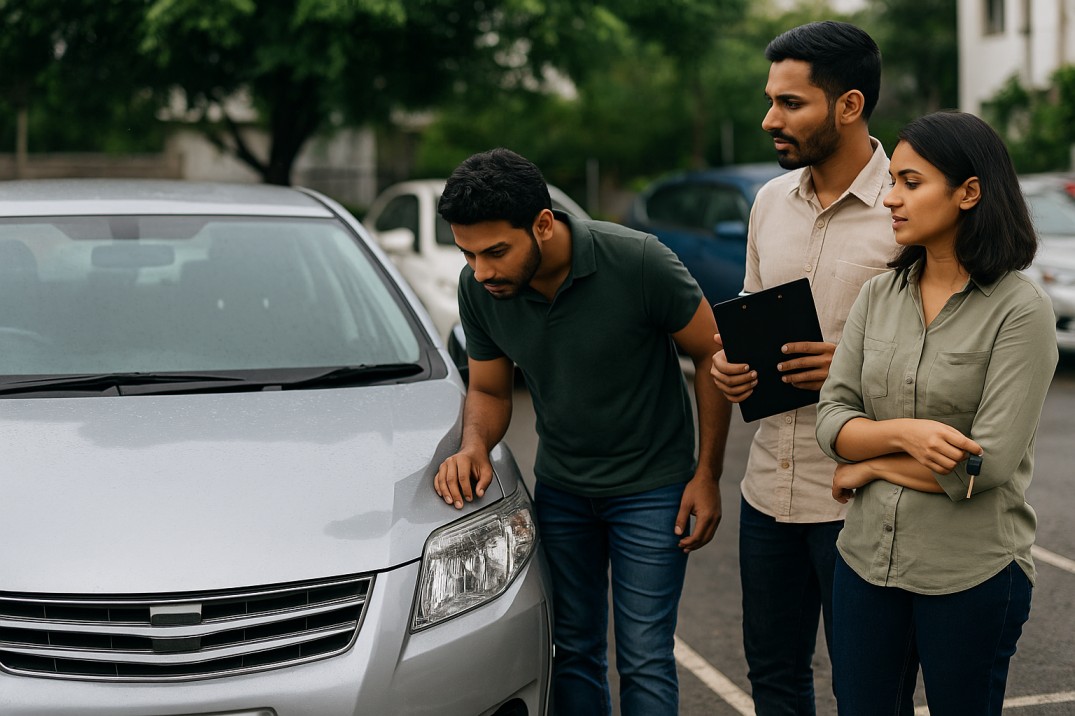
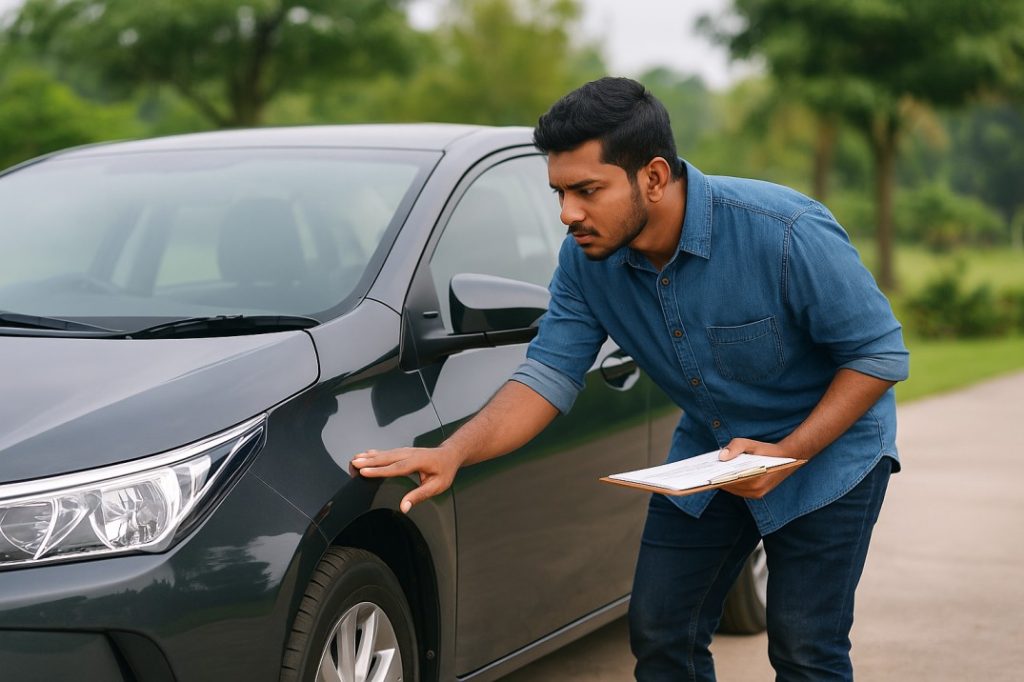
Before signing anything, always inspect the car in person or bring a trusted mechanic with you. Check for:
- Accident or paint repairs (inconsistent color or texture)
- Rust or corrosion on the body and undercarriage
- Engine condition (look for oil leaks or smoke)
- Tyres and suspension for uneven wear
- Interior condition (dashboard, upholstery, electronics)
Tip: If something looks freshly painted or replaced, ask why — it might hide previous damage.
2. Verify Mileage and Service History
Odometer tampering is common in used vehicles. Request service records or a JEVIC report (for imported cars) to confirm the mileage. A car with genuine mileage and regular maintenance is always a better deal than one with uncertain history.
3. Check Legal Documents and Ownership
Ask the seller for:
- Vehicle Registration Book (CR/Book)
- Revenue License (annual road tax)
- Insurance documents
- NIC copy of the seller
Make sure the engine and chassis numbers match the registration papers exactly. If the vehicle was imported, check the customs clearance certificate too.
4. Take a Test Drive
Drive the car for at least 10–15 minutes. Pay attention to:
- Engine noise and vibration
- Gear shifting smoothness
- Steering alignment
- Brake responsiveness
- Air conditioning and dashboard indicators
If the seller refuses a test drive that’s a red flag.
5. Get a Professional Evaluation
Many Sri Lankan car service centers (like Greasemonkey.lk, Autolanka, or Carmart) offer pre-purchase inspection services. Spending a few thousand rupees on a professional check can save you from buying a car with hidden issues.
6. Buy from Trusted Sources
Avoid random classifieds or unverified sellers. Instead, explore trusted online platforms like swop.lk, where verified users list vehicles with transparent details and contact info.
Pro Tip: Compare several cars of the same model and year to understand the fair market price before making an offer.
New vs. Used Cars — Which Is Better for You?
Choosing between a new or used car in Sri Lanka ultimately depends on your budget, long-term plans, and how much risk you’re willing to take. Both options come with distinct benefits and drawbacks. Here’s a quick comparison to help you decide which suits you best:
| Feature | New Car | Used Car |
| Price | Expensive due to import taxes | Much more affordable |
| Depreciation | High loses 20–30% value in first year | Already depreciated slower value drop |
| Maintenance | Very low for first few years | May need early repairs or part replacements |
| Warranty | Comes with manufacturer warranty | Usually expired or limited |
| Technology | Latest safety and infotainment features | Depends on model and year |
| Insurance | Higher (comprehensive required) | Lower (third-party often accepted) |
| Resale Value | Lower big loss on resale | Higher already depreciated |
| Availability | Limited due to import bans | Easier to find locally |
| Financing | Easier to get low-interest loans | Slightly higher rates or shorter terms |
| Ideal For | Long-term owners, reliability seekers | Budget buyers, short-term users |
Quick Summary
- If you value reliability, brand-new tech, and long-term ownership, a new car is worth the premium.
- If you want affordability, flexibility, and lower financial risk, a used car makes more sense especially in Sri Lanka’s current economy.
Tip: Reconditioned Japanese vehicles often provide a middle ground almost new condition at a lower price. They’re a smart compromise for many Sri Lankan buyers.
Hidden Costs to Consider Before Buying
Whether you’re buying a new or used car in Sri Lanka, the purchase price is just the beginning. True ownership involves several ongoing and sometimes unexpected costs that can impact your budget significantly. Let’s break them down 👇
1. Registration and Transfer Fees
Every vehicle purchase requires registration or ownership transfer with the Department of Motor Traffic (DMT).
- For new cars, registration fees are higher due to valuation and plate issuance.
- For used cars, transfer fees vary based on engine capacity and vehicle age.
Always confirm that the transfer has been officially recorded under your name before final payment.
2. Insurance Premiums
Insurance is mandatory, and the cost depends on the vehicle’s value and coverage type:
- Comprehensive insurance (required for new cars and bank leases) can cost 2–4% of the car’s value per year.
- Third-party insurance is cheaper but offers limited protection suitable for older cars only.
3. Vehicle Tax and Annual License Fees
All vehicles in Sri Lanka must renew their revenue license annually.
Fees depend on engine capacity, vehicle type, and emission class. Hybrid and electric cars often have lower tax rates.
4. Maintenance and Spare Parts
Used cars, especially imported ones, may need frequent servicing or part replacements.
Even new cars require regular oil changes, filter replacements, and tire checks.
Before buying, check whether spare parts for your chosen model are easily available locally especially for rare imports.
5. Fuel Costs
Sri Lanka’s fuel prices have fluctuated sharply in recent years.
Compare fuel efficiency (km per liter) between models before buying. Hybrid or small-engine cars can save thousands of rupees per month.
6. Depreciation and Resale Value
Depreciation is the largest hidden cost of owning a vehicle. A new car might lose 25–30% of its value in the first year, while used cars depreciate more slowly. If you plan to sell in a few years, consider models known for strong resale value (e.g., Toyota and Suzuki).
7. Unexpected Repairs and Modifications
Even after inspection, some used cars may need battery replacements, tyre changes, or paintwork.
It’s smart to keep an emergency fund for such costs roughly 5–10% of the car’s value.
Pro Tip: Before buying, calculate your total cost of ownership (TCO) including tax, insurance, maintenance, and fuel for at least 3 years. This gives a clearer picture than the sticker price alone.
Tips to Make a Smart Purchase Decision
Buying a car whether new or used is one of the biggest financial decisions most Sri Lankans make. A little preparation and research can save you thousands of rupees and help you avoid regrets later. Here are some expert-backed tips to guide you through a smart and safe purchase:
1. Compare Total Ownership Costs, Not Just the Price
Don’t be fooled by the price tag alone. Consider fuel efficiency, maintenance, insurance, and resale value before choosing. A cheaper car might actually cost more to maintain in the long run.
Example: A hybrid car may cost more upfront but can save over LKR 100,000 annually in fuel.
2. Research the Vehicle’s Reputation
Check user reviews and forums (like AutoLanka or Facebook groups) to learn about each model’s strengths and weaknesses. Look for common issues, fuel economy reports, and real-world experiences from Sri Lankan drivers.
3. Verify All Legal Documents
Always ensure that the registration, insurance, and revenue license are up-to-date and match the vehicle’s chassis and engine numbers.
Never buy a vehicle with “open papers” or incomplete ownership transfer it can lead to legal issues later.
4. Take a Mechanic for Inspection
Even if a car looks perfect, bring a qualified mechanic to inspect the engine, gearbox, and suspension. Mechanics can often spot issues that a normal buyer would miss.
5. Check Vehicle History & Mileage Reports
Ask for a JEVIC certificate or auction sheet for imported vehicles. For locally used cars, request service history records to confirm genuine mileage.
6. Negotiate Wisely
Do your homework on current market prices using platforms like swop.lk, then negotiate based on real value.
Be polite but firm showing you’ve done your research gives you leverage.
7. Explore Financing or Leasing Options
If your budget is tight, consider vehicle leasing or hire-purchase plans from banks. They allow you to drive your desired car while paying manageable monthly installments.
8. Prioritize Your Needs, Not Trends
It’s easy to get tempted by luxury models or fancy features. But think long-term: focus on fuel economy, service availability, and spare parts not just looks or brand prestige
9. Always Test Drive Before Paying
A 10–15 minute test drive can reveal a lot engine smoothness, brake quality, and comfort level. Never finalize a deal without driving the car yourself.
Pro Tip:
Keep emotion out of the deal. Treat it as a financial decision first and a lifestyle choice second. The smartest car buyers balance desire with logic.
Buying a car in Sri Lanka whether brand-new or used is no small decision. With prices rising and import rules constantly changing, understanding what truly matters before you buy is more important than ever.
If you’re going for a new car, you’ll enjoy the latest technology, full warranty, and reliability but at a higher price and faster depreciation. On the other hand, a used or reconditioned vehicle offers affordability and flexibility, provided you inspect it properly and verify the paperwork.
The smartest buyers don’t just focus on the sticker price they look at fuel efficiency, maintenance costs, spare parts availability, and long-term value. So, take your time, do your research, and always double-check every detail before making the final payment.
Ready to find your next ride?
Explore hundreds of verified new and used vehicles on swop.lk Sri Lanka’s trusted platform for buying and selling cars. Compare prices, talk directly to sellers, and make your next car purchase with confidence.









Leave a Comment