

Sri Lanka Cost of Living in 2025 (Complete Guide)
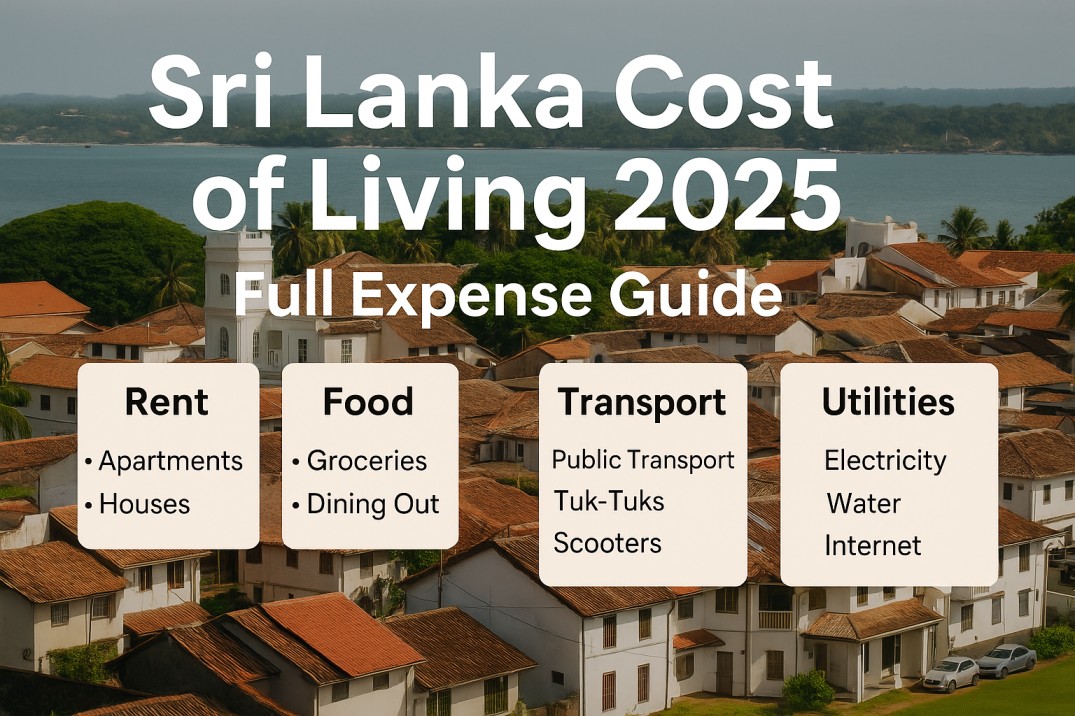
Understanding the cost of living in Sri Lanka in 2025 has become more important than ever. With the country slowly stabilizing after economic challenges and prices shifting across all major categories rent, food, transport and utilities both locals and foreigners are trying to figure out what it realistically costs to live comfortably here. Whether you’re a Sri Lankan adjusting to rising expenses, an expat planning to relocate or a traveler preparing a long-term stay, this guide gives you a clear, updated picture of how much money you actually need in 2025.
In this detailed breakdown, we’ll look at real-world living expenses across Sri Lanka’s major cities, compare budgets for locals and foreigners and highlight the areas where costs have increased or stayed affordable. From Colombo’s higher rent prices to the more budget-friendly lifestyle in cities like Kandy and Galle, this guide will help you make smarter financial decisions based on real data and everyday experience.
Is Sri Lanka Expensive to Live in 2025?
The short answer is: it depends on your lifestyle and where you live, but overall, Sri Lanka in 2025 is more affordable than many countries yet still challenging for locals due to fluctuating prices and income levels.
Sri Lanka has seen moderate improvements in economic stability, but living costs remain uneven across different regions. Colombo continues to be the most expensive city, while Kandy, Galle, Matara and smaller towns offer much more budget-friendly living.
Here’s what affects affordability in 2025:
1. Rising Rent in Major Cities
Colombo rents are noticeably higher than in other regions, especially for modern apartments or furnished spaces. However, room rentals and shared housing remain economical.
2. Food Prices Have Stabilized
After sharp increases in past years, grocery prices have leveled out. Eating at home is significantly cheaper than dining out, making food costs manageable.
3. Transport Is Still Affordable
Public transport, tuk-tuks and owning a scooter remain cost-effective options. Fuel fluctuations affect budgets, but overall transport remains cheaper than many Asian countries.
4. Utilities Vary Based on Usage
Electricity rates increased in recent years but are stable in 2025. Internet and mobile data plans remain affordable.
5. Big Difference Between Local & Expat Costs
Locals often spend less due to low-cost food options and shared housing.
Expats usually spend more due to preferences for privacy, furnished apartments and restaurant dining.
Overall Verdict:
Sri Lanka is moderately affordable in 2025.
You can live cheaply in smaller towns, but living comfortably in Colombo requires a higher budget.
Monthly Cost of Living in Sri Lanka (2025 Overview)
The actual monthly cost of living in Sri Lanka in 2025 varies depending on your lifestyle, the city you live in and whether you’re a local or an expat. Below is a quick, easy-to-read summary that shows what an average person can expect to spend each month.
Estimated Monthly Costs – Local vs. Expat (2025)
| Category | Local Budget | Expat Budget | Notes |
|---|---|---|---|
| Rent | Low–Mid | Mid–High | Colombo is significantly more expensive |
| Food (Groceries + Eating Out) | Low–Mid | Mid | Cooking at home reduces costs a lot |
| Transport | Low | Low | Public transport & scooters are very affordable |
| Utilities (Electricity, Water, WiFi) | Mid | Mid–High | Depends heavily on AC usage |
| Lifestyle (Gym, Cafes, Entertainment) | Low–Mid | Mid–High | Big gap due to different habits |
| Total Monthly Living Cost | Low $$ | Mid $$ – High $$$ | Expat lifestyle averages higher costs |
Quick Summary for 2025
- A local can live modestly with a lower budget by using public transport, cooking at home and living outside Colombo.
- An expat will generally spend more, especially on rent, imported products, restaurants and furnished apartments.
- Living in Colombo is the most expensive, while cities like Kandy, Galle and Matara offer significantly more affordable living options.
Rent & Housing Prices in Sri Lanka (2025)
Rent is the single biggest factor that determines how expensive life in Sri Lanka feels. Prices vary widely between Colombo and other cities, and depend heavily on the type of accommodation, location, and features like furniture or air-conditioning.
Apartment Rent in Colombo (2025)
Colombo remains the most expensive city in Sri Lanka for housing.
Typical Rent Ranges:
- 1-bedroom apartment (non-furnished): mid-range
- 1-bedroom (furnished): mid–high
- 2-bedroom apartment: mid–high
- Modern apartment complexes: high-range
What drives Colombo prices up?
- Location near business districts
- Demand from expats
- Limited modern apartment supply
- Preference for furnished units
Tip:
Living slightly outside the city center (Nugegoda, Dehiwala, Mount Lavinia) reduces rent significantly.
Rent in Kandy, Galle, Negombo & Other Cities
Outside Colombo, rent becomes much more affordable.
Most locals and expats looking for lower living costs choose these areas.
Typical Rent Ranges:
- Kandy: Low–mid
- Galle / Matara: Low–mid
- Negombo: Mid (due to tourism)
- Kurunegala / Anuradhapura / Jaffna: Low
Why these cities are cheaper:
- Lower demand for furnished apartments
- More housing availability
- Less expat competition
- Larger spaces for the same price
Room Rentals & Shared Housing (Budget-Friendly)
A very popular option for students, young professionals and budget travelers.
Types of room rentals:
- Single rooms
- Shared boarding houses
- Annex apartments
- Family-run accommodations
Price Range:
- Lowest-range housing option
- Utilities often included
- Great for long-term low-budget living
What Affects Rent Prices in Sri Lanka?
1. City & Neighborhood
Central Colombo = highest prices
Suburbs = more reasonable
Other cities = very cheap
2. Furnished vs. Unfurnished
Furnished units cost more, especially with AC.
3. Apartment Size & Condition
Newer buildings = higher rent
Older houses = lower cost
4. Access to Transport & Amenities
Near bus routes, supermarkets, schools = higher demand
Food & Grocery Prices in Sri Lanka (2025)
Food prices in Sri Lanka have become more stable in 2025 compared to previous years, but costs still vary depending on lifestyle choices home cooking is significantly cheaper than eating out. Below is a realistic view of what groceries and meals typically cost.
Grocery Prices in 2025 (Average Estimates)
Grocery shopping is affordable for most locals, especially when buying local produce instead of imported goods.
Common Grocery Items:
- Rice: low–mid
- Vegetables (local): low
- Chicken / Fish: mid
- Milk & Eggs: mid
- Bread: low
- Fruit (local): low
- Imported snacks / packaged foods: mid–high
What Makes Groceries Affordable?
- Local markets offer cheaper prices than supermarkets
- Seasonal produce significantly lowers food costs
- Buying in bulk reduces monthly expenses
Eating Out in Sri Lanka (Budget vs. Mid-Range)
Eating out remains more expensive than cooking at home, but still cheaper compared to many Asian countries.
Budget Meals:
- Local eateries
- Street food
- Rice & curry shops
- Bakeries
Very affordable for daily use
Mid-Range Dining:
- Casual restaurants
- Coffee shops
- Tourist-area restaurants
Costs more, especially in Colombo or Galle Fort
Imported or Specialty Cuisine:
- Western food
- Japanese / Korean / Italian dining
- Branded cafes
Most expensive eating-out category
Cooking at Home vs. Eating Out Which Is Cheaper?
Cooking at Home:
- Cheapest option
- Saves a large portion of monthly income
- Better for families and long-term residents
Eating Out:
- Convenient but more expensive
- Costs rise quickly for expats due to habit of restaurant dining
- Prices increase by location (Colombo highest)
Budget-Friendly Food Tips for 2025
- Shop at local markets instead of supermarkets
- Choose seasonal fruits and vegetables
- Reduce imported items they raise the bill fast
- Meal prepping can cut monthly food expenses significantly
- Choose local eateries for affordable dining
ransport Costs in Sri Lanka (2025 Guide)
Transport remains one of the most affordable aspects of living in Sri Lanka. Whether you rely on public transportation, tuk-tuks, or your own scooter, the overall expenses are low compared to many Asian countries. Below is a full breakdown of transport costs for 2025.
Public Transport (Bus & Train) – Cheapest Option
Bus Travel
Buses are the main mode of transportation in Sri Lanka and offer extremely low fares.
- Great for daily commuting
- Widely available in all major cities
- Very budget-friendly
Train Travel
Trains are inexpensive and scenic, especially for intercity travel.
- Longer routes are cheaper than buses
- Ideal for Kandy, Galle, Ella and coastal regions
- Comfortable for medium to long distances
Public transport = the lowest daily cost for locals and long-term travelers
Tuk-Tuks (Three-Wheelers) – Affordable & Convenient
Tuk-tuks are everywhere in Sri Lanka and offer a balance between convenience and reasonably low cost.
Pros:
- Super flexible for short distances
- Quick and available 24/7
- Cheaper outside Colombo
Cons:
- Prices vary always check or use apps where available
- Expensive compared to buses but still affordable
Owning a Scooter or Motorbike – Best Value for Daily Use
For daily commuting, owning a scooter is one of the cheapest and most practical options in Sri Lanka.
Why scooters are popular:
- Low fuel consumption
- Very easy to park
- Fast movement in traffic
- Cheap maintenance
- Widely available spare parts
Perfect for city riders and students.
What is the Best Scooter in Sri Lanka in 2025? (Full Comparison Guide)
Fuel Prices in 2025
Fuel prices fluctuate based on market conditions but remain moderate in 2025.
Impact on Daily Budget:
- Short rides cost very little
- Scooters / motorbikes remain economical
- Cars are significantly more expensive due to fuel + maintenance
Tip: Using a scooter is the most cost-efficient way to commute daily.
Transport Cost Summary
- Public transport: Cheapest
- Scooter ownership: Best overall value
- Tuk-tuks: Convenient but moderate price
- Car ownership: Most expensive (fuel + maintenance + taxes)
Utility Costs (Electricity, Water, Internet, Mobile Data)
Utility costs in Sri Lanka can vary significantly depending on your location, appliance use and household size. While water and mobile data remain affordable, electricity bills can rise quickly if you use air-conditioning or multiple appliances.
Electricity Costs in Sri Lanka (2025)
Electricity is one of the more expensive utilities in the country, especially for households using:
- Air-conditioners
- Electric heaters
- Water pumps
- Multiple refrigerators
- High-power appliances
General Observations:
- Light usage = low–mid monthly cost
- Medium usage (fan + fridge + devices) = mid range
- Heavy usage (AC regularly) = high monthly bill
Tip: Running AC only at night significantly reduces monthly costs.
Water Costs in 2025
Water bills are generally affordable and rarely become a major part of the monthly budget.
Typical Water Usage:
- Small households: low
- Larger families: low–mid
- Apartments sometimes include water in the rent
Internet & WiFi Prices (SLT, Dialog, Fiber Networks)
Home internet plans remain reasonably priced in 2025, with multiple providers offering similar packages.
Common Types of Plans:
- Fiber connections (fastest and most stable)
- Home WiFi router packages
- 4G/5G home broadband options
Price Behaviour:
- Basic plans = mid range
- High-speed fiber = mid–high
- Unlimited plans = mid range
Mobile Data Costs (Prepaid & Postpaid)
Sri Lanka has some of the most affordable mobile data prices in the region.
Providers include:
- Dialog
- Mobitel
- Hutch
- Airtel
General Pricing:
- Prepaid data packs = low
- Postpaid plans = low–mid
- Combo packs (data + calls) = good value
Tip: Many locals use mobile data instead of home WiFi to reduce monthly expenses.
Utility Cost Summary
- Electricity: Can get expensive, especially with AC
- Water: Affordable
- Internet: Moderate and reliable
- Mobile data: Very cheap and convenient
Entertainment & Lifestyle Costs in Sri Lanka (2025)
Entertainment and lifestyle expenses in Sri Lanka vary widely depending on where you live and the kind of activities you enjoy. Overall, local-style entertainment is very affordable, while modern cafés, gyms and tourist-focused spots can be more expensive especially in Colombo and Galle.
Gym & Fitness Costs
Fitness expenses depend heavily on the type of gym you choose.
Types of Gyms:
- Local gyms: low–mid
- Modern gyms with AC & equipment: mid range
- Premium fitness centers: mid–high
Most residents choose local gyms for affordability.
Restaurants, Cafés & Social Life
Dining and going out can vary dramatically depending on lifestyle.
Budget-Friendly Options:
- Local rice & curry shops
- Cafeterias
- Street food
Very affordable
Mid-Range Options:
- Casual restaurants
- Modern cafés
Moderate cost
High-End / Tourist Areas:
- Western restaurants
- Coffee chains
- Waterfront dining
Most expensive category
H3: Cinema, Events & Activities
Entertainment options like movies and local events are reasonably priced.
Examples:
- Cinema tickets = low–mid
- Local events / festivals = cheap
- Live music / nightlife = mid–high
Clothing & Personal Care Costs
Clothing:
- Local brands = low
- Imported brands = mid–high
Personal Care:
- Haircuts, salons, grooming = low–mid
- Spa & wellness = mid–high
Imported products remain the most expensive part of personal care.
Lifestyle Summary
- Local lifestyle: very affordable
- Mixed lifestyle: moderate
- Expat / Western-style lifestyle: expensive
Your lifestyle choices can double or halve your monthly budget.
Cost of Living for Expats in Sri Lanka (2025)
Sri Lanka has become an increasingly attractive destination for expats, digital nomads and long-term travelers thanks to its warm climate, friendly culture and relatively low cost of living. However, expat expenses differ significantly from local costs due to lifestyle preferences, location choices and accommodation standards.
How Much Do Expats Spend Monthly?
Most expats follow a lifestyle that blends comfort with convenience.
Typical Monthly Expat Budget:
- Low-range lifestyle: affordable
- Mid-range lifestyle: moderate
- High-range lifestyle: expensive (Colombo, furnished apartments, cafes, etc.)
Why expat costs are higher:
- Preference for furnished apartments
- More dining out
- Higher Internet/data usage
- Imported products
- Living in central or tourist-friendly areas
Best Cities for Expats in Sri Lanka (2025)
1. Colombo – Most Convenient, Most Expensive
- Fastest internet
- Modern housing
- Best restaurants & cafés
- Higher rent, higher food cost
2. Kandy – Balanced & Peaceful
- Much cheaper than Colombo
- Cooler climate
- Good long-term living environment
3. Galle & Matara – Best for Lifestyles & Remote Workers
- Beachside living
- Growing digital nomad community
- Moderate costs
4. Negombo – Airport Access + Expat Community
- Moderate rent
- Popular among Europeans
- Coastal lifestyle
Expat Housing Costs (2025)
Most expats choose:
- Furnished apartments
- Boutique housing
- Shared villas
- Coastal rentals
Rent is usually the biggest monthly expense.
Food & Shopping for Expats
Expat diets tend to drive costs up because:
- Imported foods = more expensive
- Western restaurants = pricier
- Café culture adds up quickly
However, shopping at local markets = massive cost savings.
Transport Costs for Expats
Most expats prefer:
- Scooters / motorbikes (cheap & flexible)
- Tuk-tuks for short trips
- Public transport for long distances
Scooters remain the most cost-effective option.
Safety, Culture & Daily Life Tips for Expats
- Sri Lanka is generally safe
- Smaller towns = more affordable + quieter
- Respecting local customs reduces misunderstandings
- Learn basic Sinhala phrases to simplify daily life
- Always negotiate tuk-tuk fares when no meter is used
Expat Summary
- Sri Lanka is affordable for most expats in 2025
- Lifestyle has the biggest impact on costs
- Colombo = convenient but expensive
- Coastal towns = perfect balance of budget + lifestyle
- Living like locals significantly reduces costs
Salaries in Sri Lanka (2025 Update)
Understanding salary levels is essential for calculating how affordable life in Sri Lanka is in 2025. Income varies heavily between industries, with fields like IT and tourism showing stronger growth while other sectors remain steady.
Below is a clear, updated overview of how salaries look across the country in 2025.
Average Salaries by Sector in Sri Lanka (2025)
1. Information Technology (IT)
- One of the highest-paying industries
- Strong demand for developers, analysts, designers and support engineers
Salary Range: Medium to High
2. Tourism & Hospitality
- Recovered significantly in 2025
- Includes hotel staff, chefs, guides, bartenders, receptionists
Salary Range: Low to Medium, higher in tourist hubs like Galle & Ella
3. Retail & Sales
- Stable but modest income levels
Salary Range: Low to Medium
4. Education (Schools, Institutes & Tutoring)
- Consistent salaries across the sector
Salary Range: Low to Medium
5. Public Sector Jobs
- Reliable but generally lower pay
- Benefits and job security are strong incentives
Salary Range: Low
6. Freelancing & Remote Work
- Rapidly growing among young professionals
- Earnings depend on skill and clients
Salary Range: Medium to High
Minimum Salary Needed to Live Comfortably in Sri Lanka (2025)
For a single person:
- Low-budget lifestyle: Low monthly income is enough
- Comfortable lifestyle: Medium monthly income
- Western-style lifestyle: Medium–High income
For a couple:
- Shared rent drastically reduces overall expenses
- Medium combined income offers a comfortable lifestyle
For a small family:
- Rent + utilities are the biggest expenses
- Medium to higher income recommended for comfort
Salary vs. Living Expenses (Practical Comparison)
- Living in Colombo requires a higher salary due to rent
- Living in Kandy, Galle or smaller towns offers more comfort for the same income
- Expats or remote workers earning foreign income can live very comfortably
Key Insight:
Earning in a foreign currency makes Sri Lanka significantly more affordable.
Salary Trends for 2025
- IT sector: Expected salary growth
- Tourism sector: Stabilized and rising due to travel recovery
- Retail sector: Steady but low
- Freelancing: Major opportunity for higher earnings
How Much Money Do You Need Per Month in Sri Lanka?
The amount of money you need each month in Sri Lanka depends entirely on your lifestyle, the city you choose and whether you’re a local resident, an expat, or a long-term traveler. Below is a simple, realistic breakdown for 2025.
Monthly Budget for a Single Person (2025)
1. Low-Budget Lifestyle (Local Style)
- Basic rent
- Home cooking
- Public transport
- Minimal entertainment
Affordable monthly cost
2. Comfortable Lifestyle
- Decent apartment
- Mix of home cooking and eating out
- Occasional café or movie
- Scooter or public transport
Medium-range monthly cost
3. Western / Expat Lifestyle
- Furnished apartment
- Frequent dining out
- High-speed internet
- Shopping + social events
Medium–High monthly cost
Monthly Budget for a Couple
Couples save significantly because rent and utilities are shared.
- Low-budget: Affordable
- Comfortable: Medium
- Expat-style: Medium–High
Sharing accommodation cuts overall living expenses almost by half.
Monthly Budget for a Small Family
Families generally have higher expenses due to rent, utilities, groceries and schooling.
- Basic lifestyle: Medium
- Comfortable lifestyle: Medium–High
- Premium lifestyle: High
City-Based Cost Differences
Colombo
Most expensive city — higher rent, restaurants, cafés.
Kandy / Galle / Matara
Balanced cost of living — ideal for comfortable budgets.
Negombo / Kurunegala / Jaffna
More affordable — ideal for long-term local living.
Summary — How Much Do You Actually Need
- Low-budget living: affordable monthly cost
- Comfortable life: medium monthly cost
- Expat-style spending: medium–high monthly cost
Your lifestyle choices (rent, food, transport, and entertainment) determine everything.
Tips for Budget Living in Sri Lanka (2025 Edition)
Living on a budget in Sri Lanka is completely achievable if you make smart choices about food, transport, housing and daily expenses. Here are practical tips that can significantly reduce your monthly spending while still maintaining a comfortable lifestyle.
1. Shop at Local Markets Instead of Supermarkets
Local markets and street vendors offer fruits, vegetables and essentials at much lower prices than supermarkets.
- Buy seasonal produce for the best deals
- Avoid imported goods whenever possible
2. Cook at Home to Cut Food Costs
Home cooking is one of the biggest money-savers in Sri Lanka.
- Daily meals cost far less than restaurant dining
- Perfect for long-term residents and families
- Rice & curry + local ingredients = very affordable
3. Choose Budget-Friendly Housing Options
You can reduce rent dramatically by making smart choices:
- Live slightly outside Colombo (Dehiwala, Mount Lavinia, Nugegoda)
- Consider shared housing or room rentals
- Unfurnished apartments are cheaper than furnished ones
4. Use Public Transport or a Scooter
Public transport is extremely affordable. If you want more flexibility, a scooter is the cheapest private transport option.
- Bus & train fares = very low
- Scooters = low fuel + cheap maintenance
- Tuk-tuks should be used only for short distances or emergencies
5. Limit Imported Products
Imported snacks, cereals, cosmetics and packaged foods increase your bill quickly.
- Choose local brands
- Buy in bulk when possible
- Stick to essentials
6. Take Advantage of Local Restaurants
Local eateries, bakeries and rice-and-curry shops offer full meals at very low prices.
- Great for daily or occasional meal-outs
- Avoid tourist restaurants if you’re on a strict budget
7. Control Electricity Usage
Electricity is the most expensive utility in Sri Lanka.
- Limit AC usage
- Turn off devices when not in use
- Use energy-efficient bulbs and appliances
8. Consider Smaller Cities for Lower Costs
If your work is remote or flexible, living outside Colombo reduces overall expenses:
- Kandy
- Galle
- Matara
- Negombo
- Kurunegala
These cities offer a much cheaper and slower-paced lifestyle.
9. Use Mobile Data Instead of High-End WiFi Plans
Mobile data plans are very affordable compared to premium fiber packages.
- Great for singles or couples
- Combine data + hotspot to reduce costs
10. Set a Monthly Budget and Track Spending
Simple budgeting keeps your costs under control.
- Track food, transport, rent, utilities
- Identify unnecessary spending
- Adjust monthly habits
The cost of living in Sri Lanka in 2025 is shaped by lifestyle choices, city selection and personal spending habits. While Colombo remains the most expensive place to live, many other cities like Kandy, Galle and Matara offer a far more affordable lifestyle without sacrificing comfort.
For locals, daily life can be managed on a modest budget, especially with smart choices like cooking at home, using public transport and shopping at local markets. For expats, Sri Lanka is still considered a budget-friendly destination offering a comfortable lifestyle at a fraction of the cost compared to Western countries, provided you avoid high-end restaurants, imported goods and premium rentals.
Overall, Sri Lanka remains moderately affordable, with the potential to be very budget-friendly depending on how you structure your monthly expenses. Whether you’re a local, a long-term traveler or an expat planning to relocate, Sri Lanka offers a balanced living experience with a mix of affordability, culture, natural beauty and modern comforts.









Leave a Comment